











How to Relate to Children:
Author: H. H. Pope Shenouda III.
 INTRODUCTION
Many write for adults and few are those who write for children. Also, many occupy themselves talking with adults, but rare are those who love to talk to children. So, sometimes children feel they are not the core of attention and respect of adults, and accordingly they try to draw their attention by many ways, perhaps by outcry or stubbornness or (naughtiness).
In this book, we need to talk about the child, his mentality and how to relate to him and gain his love, and to serve him spiritually, socially and culturally. Because the child is the first cell of the society and the church, if we gain him, we win an entire generation, and if we lose him we lose the future of the generation we live in, and consequent loss of the other generations.
I personally love children and love to joke, play, talk and make friends with them. In childhood I find innocence, truth and openness, as well as the quick response which we lack in adults. This book is not the outcome of a study of books of psychology and education, but the result of personal experiences with the
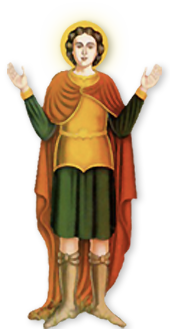
 Abanoub was only twelve years old when he was martyred by the Roman ruler. On July 31 our Church celebrates his death, as the day of his birth into eternal life.
 This is the story of a famous leader named Joshua who had 80 disciples. All of them became good leaders.

 Subscribe to RSS Feed